

Can Marble Stains Be Removed?
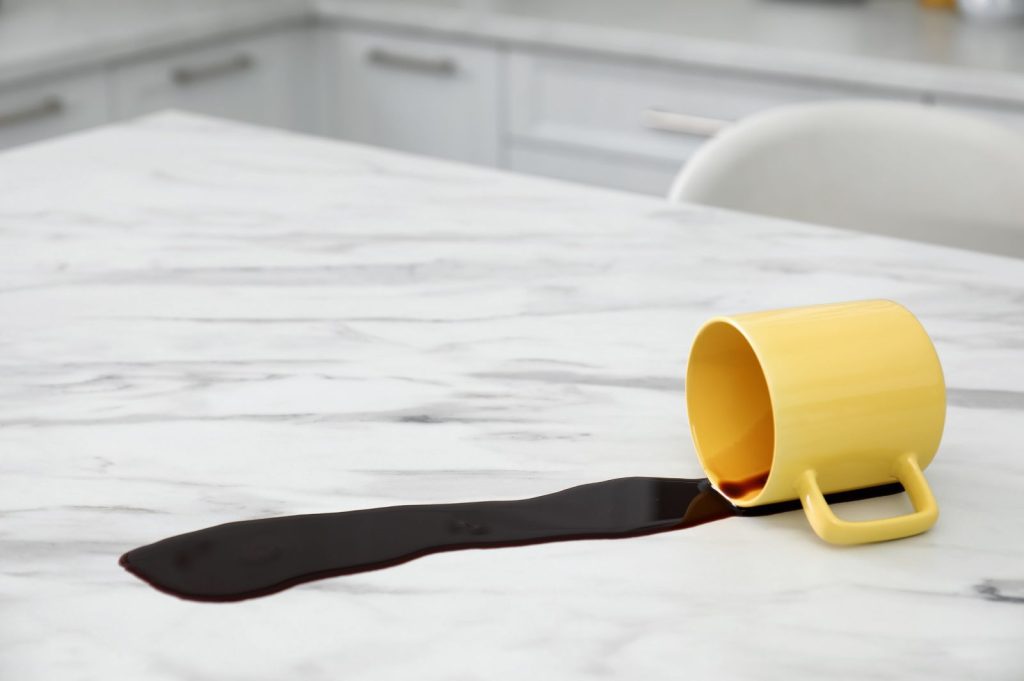
Yes, marble stains can often be removed or improved, but it all depends on how early you catch the stain and how far it has gone into the stone. The usual way to treat staining is with a poultice, which is a paste applied over the stained area to help draw the stain back out of the marble. If the stain is fairly fresh, there is a much better chance of getting a good result. If it has been sitting there for years, the chances are it may not come out completely.
Marble Stains Are Not All the Same
When people see a mark on marble, they often call it a stain, but it is not always staining. Sometimes it is etching. Sometimes it is a watermark. Sometimes it is a dull patch where the surface has been damaged. So before you can say whether it will come out, you need to know what has actually happened to the stone.
A stain is normally something that has soaked into the marble. It might be oil, food, drink, rust, grease, cosmetics or some other product that has penetrated into the surface. Marble is a natural stone, so if it is not properly sealed or the mark has been left too long, it can draw that material in.
Etching is different. That is where an acidic product has reacted with the marble and damaged the surface. Things like lemon juice, vinegar, wine, some cleaning products and acidic drinks can etch into marble. This can leave a dull, cloudy or ring-shaped mark that looks like staining, but it is actually damage to the finish. The Marble Institute of America notes that calcareous stones such as marble, limestone, travertine and onyx are sensitive to acidic cleaning products.
How Marble Stain Removal Works
Most marble stain removal would normally involve a poultice. A poultice is a powder mixed up into a paste and applied over the stained area. Once it is on the stone, the area is covered with plastic or polythene and taped off so it is sealed.
The whole idea is to make the stone sweat a bit and help open the pores, so the stain can rise up and come out into the poultice. This is normally done over 24 to 48 hours. Once it has had enough time to work, the poultice is removed and the area is rinsed.
The result depends on the stain. Sometimes it comes out well. Sometimes it improves but does not disappear completely. Sometimes it needs more than one attempt. And sometimes, if it has gone too deep, it just will not come out fully.
Timing Makes a Big Difference
The biggest thing with stain removal is how long the stain has been there.
If you catch it early, you have a much better chance. If the stain is less than three or four months old, there is usually a better opportunity to get a decent result. But if the staining has been there for a couple of years, the chances are it will not come out properly.
That is because the stain has had time to penetrate further into the stone. Once it gets deep enough, you are no longer just dealing with something sitting near the surface. You are trying to pull something out that has worked its way right into the marble.
What Types of Stains Can Affect Marble?
Marble can be affected by a lot of different stains and marks. Some of the common ones include:
- Oil and grease marks
- Coffee, tea, wine and food stains
- Rust marks from metal objects
- Water rings and glass marks
- Cosmetic stains around vanities
- Dirt and grime on floors
- Marks from the wrong cleaning products
Oil-based stains can darken the stone and usually need to be treated differently from organic stains like coffee, tea, food or leaves. Rust and metal stains can be particularly difficult, especially if they are deep in the stone. The stone care guide also notes that different stain types need different treatment methods, which is why it is important to know what caused the stain before trying to remove it.
Some Marks Are Actually Etching
This is where a lot of people get caught out. A mark from a glass, cup, wine, lemon juice or acidic cleaner might not be a stain at all. It might be etching.
With etching, the acid has eaten into the surface of the marble. For lighter etching, you would first try marble polishing powders with a hand machine, soft pad and a bit of water. The powder has a fine grit in it that helps remove the etched surface. If that does not work, then you may need to go through the diamond pads and polish the stone back up through the grades.
So if the mark is a dull ring or cloudy patch, the answer may not be stain removal. It may need polishing or resurfacing.
Can Old Marble Stains Be Removed?
Old marble stains are the hardest ones. They can sometimes be improved, but you have to be realistic. If something has been sitting in the marble for years, there is a fair chance it has gone too deep to come out completely.
In some cases, a poultice may still be worth trying. But it is not something you would promise as a guaranteed fix. The more time the stain has had to penetrate the stone, the harder it is to remove.
Sometimes the best result is making it look better, rather than making it disappear completely.
What Should You Avoid Using on Marble?
The biggest mistake is using the wrong cleaning product. Marble does not like acids, so you do not want to use vinegar, lemon juice, harsh bathroom cleaners, grout cleaners or acid-based products. These can damage the surface and cause etching.
You also want to avoid abrasive cleaners or scouring pads, because they can scratch the surface. And you should not just start mixing chemicals together. That can be dangerous and it can also make the problem worse.
If you are not sure what the mark is, it is better to stop before throwing more products at it. You can turn a stain problem into an etching problem as well.
Does Sealing Stop Marble From Staining?
Sealing helps, but it does not make marble bulletproof. A good penetrating sealer can help reduce how much the stone absorbs and give you more time to clean up spills. It can help protect against oil, grease, dirt and general contamination.
But even sealed marble can still be marked, especially by acidic spills. Acid can start damaging the surface straight away, even if the stone has been sealed. So sealing is important, but you still need to look after the marble properly.
What Should You Do If You Spill Something on Marble?
If something spills on marble, the first thing is not to wipe it everywhere. Blot it up. Wiping can spread it across the surface and make the problem worse.
Then rinse the area with clean water and a suitable mild cleaner if needed. Dry it properly with a soft cloth. If the mark is still there, do not start using harsh products to try and force it out. That is when it is better to get the stone looked at properly.
When Should You Call a Professional?
You should call someone in if:
- You do not know how to remove it yourself
- The stain has been there for a while
- You do not know what caused the mark
- The marble has gone dull or cloudy
- The mark looks like a ring or acid etch
- You have already tried cleaning it and it has not worked
- The stain is on a benchtop, floor, vanity or table that you do not want to damage further
A professional can look at whether it is staining, etching, surface wear or something else. From there, they can decide whether it needs a poultice, polishing powder, diamond polishing, resurfacing or another repair method.
Treat Stains As Early As Possible
So, can marble stains be removed? A lot of the time, yes, they can be improved or removed, especially if they are treated early. But it depends on the type of stain, how long it has been there and how far it has penetrated into the stone.
The main thing is not to leave it too long and not to use the wrong cleaning products. Marble is a beautiful stone, but it needs the right treatment. If you catch the stain early and treat it properly, you have a much better chance of bringing the marble back.
Contact Marble Everlast
Need help restoring, polishing or protecting your marble, stone or terrazzo surfaces? Speak with the Marble Everlast team today.
More from the Blog