

Why Is My Marble Floor Dull?
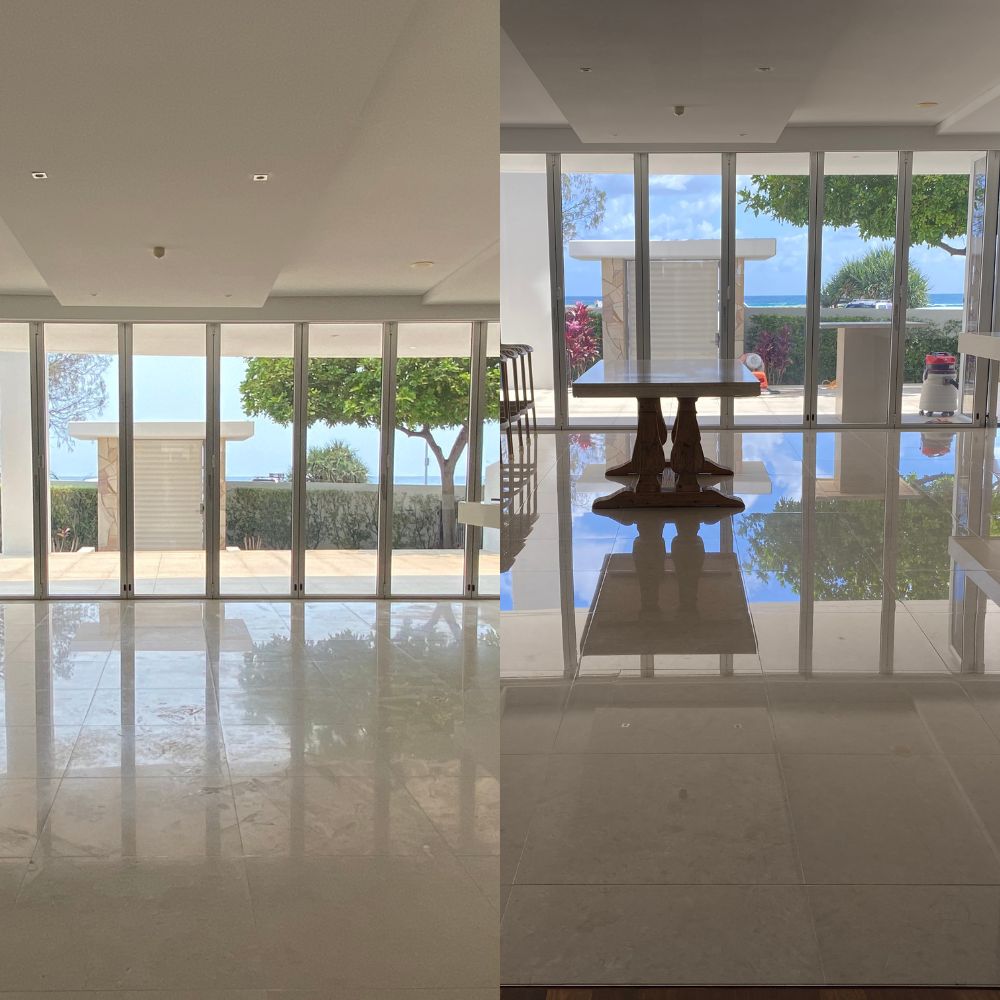
Why Does Marble Go Dull?
Marble is a beautiful stone, but it does need to be looked after properly. The reason marble floors go dull is usually because the surface has started to wear. When marble is polished, it has a reflective finish. Over time, that finish can break down, especially in areas that get walked on every day.
You tend to see it first in the main traffic areas. Hallways, entrances, kitchen walkways, living areas and commercial foyers usually show dullness before the rest of the floor. That is because people are constantly walking over those same areas, bringing in dirt, sand and grit from outside.
That grit is one of the biggest problems. It works like a fine abrasive under your shoes. You might not notice it happening day by day, but over months and years it slowly scratches and wears away the polished surface. Once that reflective layer is gone, the marble starts to look flat, cloudy or tired.
So in a lot of cases, the stone itself is not ruined. It has just lost the polished finish.
Wear And Tear From Foot Traffic
Most dull marble floors come down to general wear and tear. Floors are different from benchtops because they are walked on all the time. Even if the floor is cleaned regularly, the surface still takes a lot of abuse.
Shoes, dust, grit, pet traffic, furniture movement and day-to-day use can all mark the surface. In high-traffic areas, the shine can wear away and leave dull patches or traffic lanes.
This is why a marble floor can still be clean but look dull. Cleaning removes dirt from the surface, but it does not always restore the polish. If the marble has physically lost its finish, it needs to be polished or resurfaced.
Acidic Cleaners Can Make Marble Look Dull
Another common reason marble floors become dull is etching. Marble does not like acidic products. Cleaners that contain vinegar, lemon, acidic bathroom chemicals, grout cleaners or harsh chemicals can damage the surface.
When acid touches marble, it can burn into the finish and leave a dull mark. This is called etching. A lot of people mistake etching for staining, but it is different. A stain is something that has gone into the stone and changed the colour. Etching is where the surface has been damaged and the shine has been taken off.
Etching can show up as:
- Cloudy patches
- Pale marks
- Dull spots
- Water-ring style marks
- Areas that look like they have lost their shine
If the etching is light, it may come back with marble polishing powder. If it is deeper, the area may need to be worked back with diamond pads and then polished again.
Cleaning Product Build-Up Can Leave A Hazy Finish
Sometimes a marble floor looks dull because there is a build-up sitting on top of it. This can happen when too much cleaning product is used, the floor is not rinsed properly, or dirty mop water is spread across the floor.
More cleaner does not mean a better clean. In fact, using too much product can leave a film on the stone. Over time, that film can make the marble look hazy, streaky or cloudy.
This can also happen if the wrong pads or cleaning products are used. Some products leave coatings behind, and those coatings can stop the stone from looking clear and polished.
If the issue is just residue, a proper clean with the right stone-safe product may improve it. But if the actual surface has worn down, cleaning alone will not bring the shine back.
Scratches And Abrasive Cleaning Can Remove The Shine
Marble can also go dull if it has been cleaned too aggressively. Abrasive pads, scouring powders, harsh scrubbers and worn vacuum heads can all scratch the surface.
Even fine scratches can affect how the light reflects off the stone. The more scratches there are, the duller the marble looks.
This is why marble should be cleaned with care. A soft mop, clean water, and a pH-neutral stone cleaner are usually the safest approach for regular maintenance. Avoid anything acidic, abrasive or too harsh.
Is The Marble Dull, Etched Or Stained?
It is important to work out what the problem actually is, because dullness, etching and staining are not all treated the same way.
| Problem | What it looks like | Common cause |
| General dullness | Larger areas look flat, tired or worn | Foot traffic, grit and general wear |
| Etching | Pale, cloudy or dull marks | Acidic cleaners, spills, wine, citrus or vinegar |
| Product build-up | Hazy, streaky or cloudy finish | Too much cleaner or poor rinsing |
| Staining | A coloured mark in the stone | Oil, food, rust, organic matter or spills |
| Scratching | Fine lines or worn traffic areas | Dirt, grit, furniture or abrasive cleaning |
A dull marble floor is not always just dirty. Sometimes it needs cleaning, sometimes it needs polishing, and sometimes it needs full resurfacing.
Can A Dull Marble Floor Be Restored?
Yes, in many cases a dull marble floor can be restored.
The first thing we would normally do when light wear is visible is try polishing powders with a machine polish. The powder has fine abrasive material in it that helps bring the shine back to the surface. If that works, then that may be all that is needed.
If the floor is still dull after that, then the damage is usually deeper. That is when diamond pads may be needed. The floor is resurfaced through different grades of diamonds to remove the worn or damaged surface. Once that process has been done, polishing powders can be used to bring the finish back.
It depends how far the dullness has gone into the marble. Light dullness is a much easier job. Heavy wear, deep etching, scratches or traffic lanes usually need more work.
When Does Marble Need Diamond Resurfacing?
Diamond resurfacing may be needed when the marble has gone past the point of a simple polish.
This is usually the case when:
- The floor still looks dull after polishing powder
- There are worn traffic lanes
- The surface has deeper scratches
- There is widespread etching
- The floor has lost most of its shine
- The tiles are uneven or have lippage
- Previous coatings or damage need to be removed
With diamond resurfacing, the surface is worked back properly. The diamonds remove the damaged top layer and rebuild the finish through the grades. Once the surface is ready, the marble can then be polished.
That is how you get the floor looking clear and reflective again.
How To Stop Your Marble Floor Going Dull Again
Once your marble floor has been restored, the main thing is keeping grit, harsh chemicals and residue off the surface.
For regular care:
- Dust mop or sweep the floor regularly.
- Use mats at entrances to reduce dirt and grit.
- Clean with a pH-neutral stone cleaner.
- Do not use vinegar, lemon, acid-based cleaners or harsh bathroom cleaners.
- Do not use scouring pads or abrasive powders.
- Rinse the floor properly after cleaning.
- Do not leave excess moisture sitting on the floor.
- Wipe up spills quickly.
- Avoid dragging furniture across the marble.
A good maintenance routine can make a big difference. It will not stop all wear forever, but it can help the floor hold its finish for longer.
When Should You Call A Marble Restoration Specialist?
You should call a marble restoration specialist if the floor still looks dull after proper cleaning, or if you can see etching, scratches, traffic marks or cloudy patches.
A professional can tell whether the floor needs cleaning, polishing, honing, sealing, or diamond resurfacing. That is important because the wrong process can make the problem worse.
For example, if the dullness is just residue, it may only need a proper clean. If the surface has been etched or worn down, it will need polishing. If the damage is deeper, it may need diamonds.
The best approach depends on the condition of the marble.
Key takeaway: A marble floor usually becomes dull because of wear and tear. Over time, foot traffic, dirt, grit, cleaning products, acidic spills and general use can take the shine off the surface. The first thing we would normally try is polishing powders and machine polishing to see if that brings the stone back. If the dullness is too far gone, then the floor may need to be resurfaced with diamond pads before it can be polished again.
Key Points
- Marble floors often go dull because the polished surface has worn down.
- Dirt, sand and grit can act like an abrasive under your shoes.
- Acidic cleaners and spills can etch marble and leave dull marks.
- Using too much cleaning product or not rinsing properly can leave a hazy film.
- Light dullness may be restored with polishing powders and machine polishing.
- Deeper wear, etching or scratches may need diamond resurfacing.
- Marble should be cleaned with a pH-neutral stone cleaner, not vinegar, acidic products or harsh bathroom cleaners.
Marble needs the right process
Most of the time, a dull marble floor is caused by wear and tear. The stone has not always failed. It has usually just lost the polished surface from foot traffic, grit, cleaning products or acidic marks.
If the dullness is light, polishing powders and machine polishing may bring it back. If it is still dull, then the floor may need to be resurfaced with diamonds and polished again.
The main thing is not to keep throwing harsh cleaners at it. Marble needs the right process. Once it has been properly restored, regular stone-safe cleaning and maintenance will help keep it looking better for longer.
Contact Marble Everlast
Need help restoring, polishing or protecting your marble, stone or terrazzo surfaces? Speak with the Marble Everlast team today.
More from the Blog