

What Is Stone Restoration?
When people hear “stone restoration”, they often think it’s just a deep clean or a quick polish, but it’s more than that. Stone restoration is about bringing the stone back to a “near original” condition when it’s worn, stained, etched, scratched, or just looking tired. You’re not masking the problem, you’re actually improving the surface and protecting it properly again.
Understanding the Basics
In simple terms, what does “stone restoration” mean?
Stone restoration is the process of fixing up natural stone so it looks and performs like it should. That can mean cleaning, removing stains, smoothing the surface, repairing damage, and sealing it so it holds up better going forward.
How is restoration different from general cleaning or polishing?
A general clean is mainly about removing surface grime. Polishing can lift the appearance, but it won’t always fix deeper issues.
Restoration is the bigger picture, it’s when we’re dealing with things like:
- Stone that’s permanently stained because it hasn’t been sealed for years
- Etched or dulled patches that won’t come up with regular cleaning
- Scratches, roughness, or damaged joints that need attention
It’s often a combination job: clean it properly, repair what’s needed, sometimes its sourcing new stone for damaged areas beyond repair, then re-finish and seal it so it stays looking good.
What types of natural stone can be restored?
Most stone can be restored, it just depends on what condition it’s in and what you want it to look like at the end. We work across the common types you see in homes and commercial spaces, including marble, limestone, travertine, sandstone, granite, terrazzo, slate, and even some man-made surfaces.
What are the most common signs a stone surface needs restoration?
Usually, the stone tells you pretty quickly. The big signs are:
- It looks dull or patchy even after you clean it
- It’s got dark staining that isn’t lifting
- You can see rings, etches, or rough spots
- There’s mould/algae build-up outdoors (especially pool areas)
- The stone absorbs water fast instead of beading on the surface
On pool surrounds in particular, the big giveaway is when the stone has never been sealed (or hasn’t been sealed in years), that’s when problems really start.
What kind of damage or wear can restoration fix?
A lot, honestly, as long as it hasn’t been left too far gone.
Restoration can help with:
- Dullness from traffic and weathering
- Scratches and surface wear
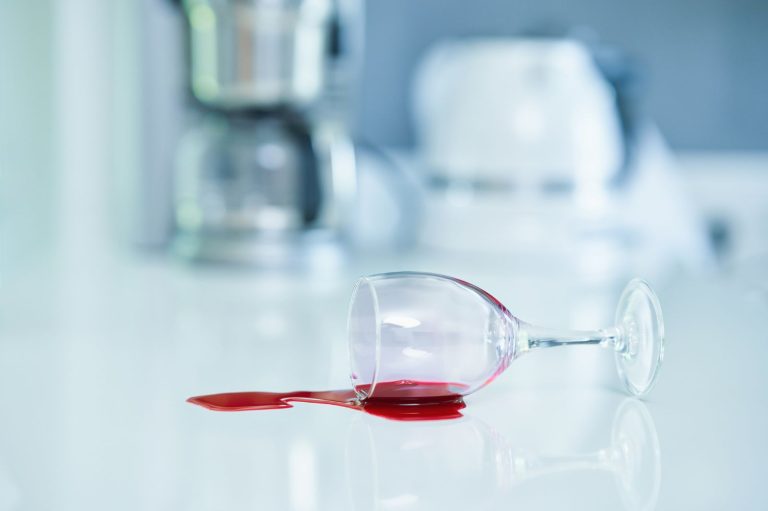
- Etching (common on calcareous stones like marble/limestone)
- Stains, depending on what they are and how deep they’ve gone
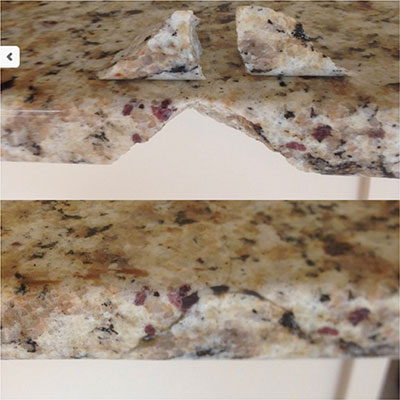
- Chips and small repairs, where practical
And just being real: some staining becomes permanent if a stone has been left unsealed for too long, at that point, you’re either accepting what remains, or replacing tiles if they can be matched.
The Restoration Process
What does a typical restoration job look like from start to finish?
A typical job usually runs like this:
- Clear off loose debris first, grit, dirt and outdoor where also talking about organic matter like leaves.
- Apply the right cleaning chemical for the stone and the problem.
- Agitate / machine clean where needed (not just a quick scrub by hand).
- Rinse properly and this matters. If stronger chemicals are used, we’ll neutralise so it’s safe and stable afterwards.
- Repairs if required joints, small tile replacements, minor patch-ups (depending on what we’re dealing with).
- Finish work honing/polishing depending on the stone and finish required.
- Sealing usually 2–3 coats of a premium sealer in outdoor scenarios.
How do you assess what level of restoration is needed?
We look at:
- The stone type (some stones are more sensitive than others)
- Whether the issue is surface-level or has soaked in
- Whether the stone has been sealed before, and if it’s worn off
- How brittle or weathered it is (especially outdoors)
- What the customer wants: matte, honed, more shine, natural look, etc.
What tools and materials do you use?
It depends on the job, but typical tools/materials include:
- Commercial cleaning chemicals suited to the stone
- Floor scrubbers / machine cleaning
- Pressure washing carefully where appropriate
- Stone grinding machines with diamond pads
- Neutralising solutions (for example, bicarb/soda-based rinses after stronger chemicals)
- Sealers (standard sealers, and sometimes enhancers to bring colour back)
How do you decide whether to resurface, polish, or repair?
If it’s mainly dirty and stained cleaning + sealing might be enough.
If it’s rough, scratched, or etched that’s when honing/polishing comes into it.
If the stone or joints are damaged, then we look at repairs, but always with realistic expectations. Sometimes a repair is simple; other times if the tile is old and discontinued, matching can be the hardest part.
Does the approach change depending on stone type or location?
Yeah, 100%. A benchtop is a different world to a floor. And a floor is different again to an outdoor pool surround that gets smashed by sun, rain, and chemicals.
Outdoor sandstone, for example, can be fragile if it’s never been sealed, you can’t just “blast it” with high pressure and hope for the best, because you’ll blow out joints and create more work (or more damage).
Restoration vs Replacement
When is stone worth restoring versus replacing?
Most of the time, restoration is worth it, especially when the stone is a quality material and the issue is wear, dullness, or neglect.
Replacement starts making more sense when:
- The stone is structurally failing
- Staining is deep and permanent across a large area
- Tiles are cracked everywhere or the base underneath has problems
- You can’t get a finish the customer is happy with
Can older, severely damaged stone still be brought back to life?
Often, yes. A lot of older stone just hasn’t been maintained properly, and once it’s cleaned and sealed properly, the change can be massive.
But if it’s been neglected for 10–15 years with no sealer, you might be dealing with permanent staining or deterioration, and you need to be upfront about that.
Examples where restoration saved a full replacement
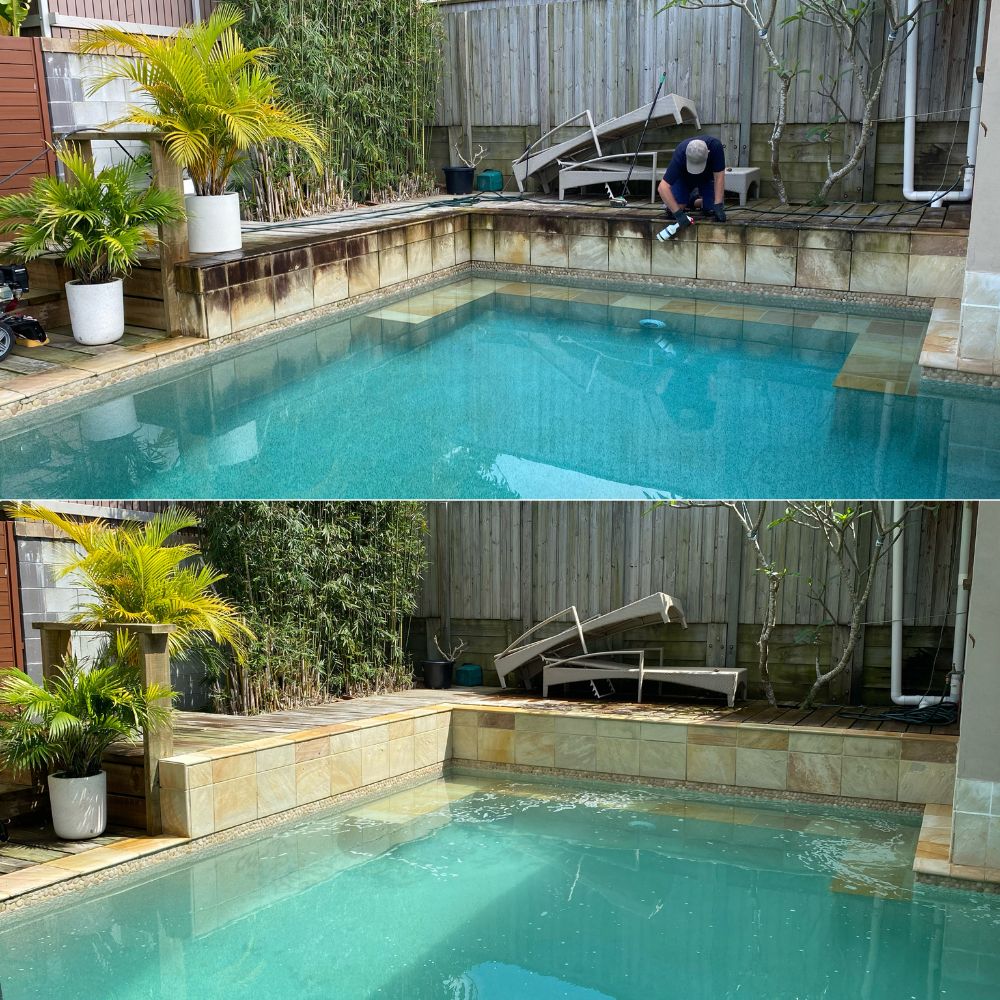
This is common on pool surrounds. People assume the only option is ripping it up, but once it’s professionally cleaned, repaired where needed, and sealed properly, it can look like a completely different area. Mark’s always described it as “chalk and cheese” once it’s cleaned, the difference really shows.
Finishes & Results
What finishes can you achieve?
It depends on the stone surface but for most stone types, most people choose between:
- Honed / matte (more natural, less reflective)
- Polished (higher shine, more reflection)
Some stones and applications suit one finish better than the other, especially floors where heavy foot traffic can wear a high polish down over time.
How much difference can restoration make visually?
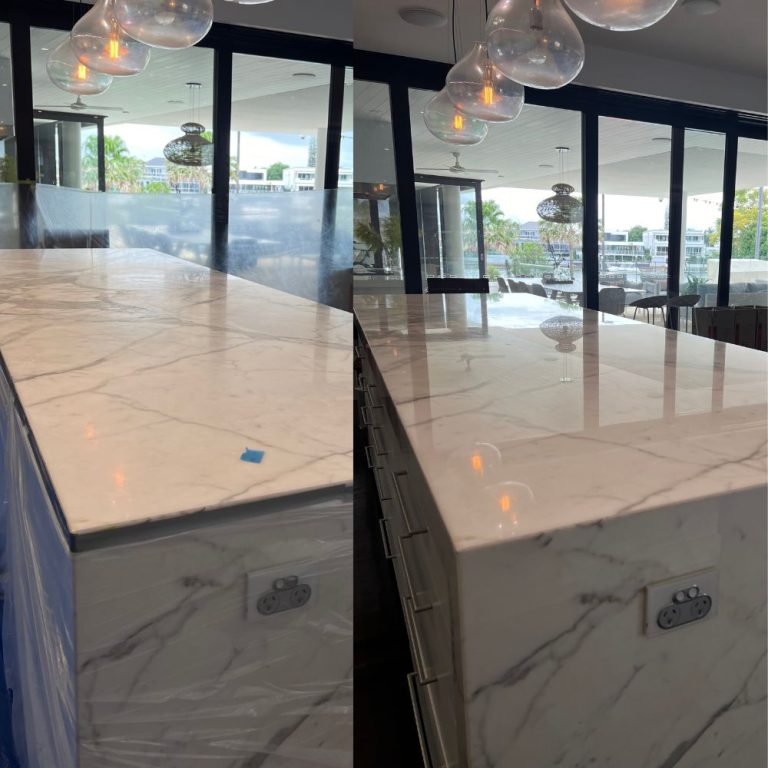
Usually a lot, especially where the stone has darkened, dulled, or is uneven in colour from years of weather or grime.
A big one outdoors is using an enhancing sealer when it suits the job, it can bring colour and pattern back that people forgot was even there.
Can restoration improve durability as well as appearance?
Yes, mainly through sealing and correct finishing.
The sealer helps close up the pores and makes the stone easier to maintain. Once it’s sealed properly, you’ll see water bead up, and staining is much less likely to soak in straight away.
Professional Insight (Mark’s Practical Advice)
How often should stone be restored or re-polished?
It depends on use and exposure.
For something like sandstone around pools, a lot of homeowners find a professional clean every 2–3 years is a good guide, then you maintain it in between by staying on top of leaves and grime.
How important is sealing after restoration?
Sealing is a big deal. No point cleaning stone properly if you’re not going to protect it, otherwise you’ll be calling someone again in six months with the same issues coming back.
What’s your favourite part of seeing a restoration finished?
The before-and-after. Most customers are stoked when they see the transformation properly, especially on outdoor areas that looked like they were beyond saving.
What’s one thing most people don’t realise about stone restoration?
Most people don’t realise how much damage DIY cleaning can do, especially pressure washing or using harsh chemicals without understanding the stone.
A lot of the time, the chemical does the work, not the pressure. If you go too hard with pressure on fragile stone, you’ll rip joints out and create a bigger problem than you started with.
Contact Marble Everlast
Need help restoring, polishing or protecting your marble, stone or terrazzo surfaces? Speak with the Marble Everlast team today.
More from the Blog