

How Do You Clean Travertine Benchtops
To clean travertine benchtops, start by dusting or wiping away crumbs and grit with a dry microfibre cloth, so you’re not dragging abrasive particles over the surface. Then wipe the benchtop with warm water and a few drops of pH-neutral dishwashing liquid or stone soap using a soft cloth or sponge, followed by a pass with clean water to rinse off any residue. Finish by drying the surface immediately with a clean microfibre cloth to prevent streaks and water spots, and avoid any acidic or abrasive cleaners (like vinegar, lemon, bathroom cleaners, or cream cleansers) as they can etch and dull the travertine over time.
Daily & Routine Cleaning (Best Practice)
1. Wipe away dust and grit first
Use a dry microfibre cloth to remove crumbs and grit.
Grit is abrasive and can cause fine scratches over time.
2. Clean with warm water + mild detergent
Mix warm water with a few drops of pH-neutral dishwashing liquid or stone soap
Wipe gently with a soft cloth or sponge. No scrubbing needed.
3. Rinse thoroughly
Go over the surface with clean water to remove any soap residue.
4. Dry immediately
Buff dry with a clean microfibre cloth to prevent water marks or streaking.
Are Your Stone Surfaces in Need of Professional Restoration?
Call The Marble Everlast Team Today
0451090900
What Not to Use on Travertine
Avoid anything acidic or abrasive, including:
- Vinegar, lemon juice, citrus cleaners
- Bathroom, grout, or tile cleaners
- Cream cleansers or abrasive powders
- Steel wool or hard scouring pads
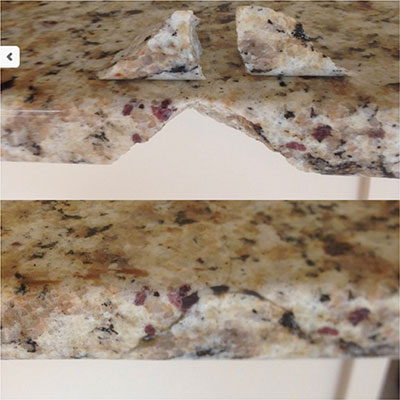
These will etch, dull, or damage the travertine
Dealing With Spills & Marks
Spills
- Blot immediately (don’t wipe as it can spread the liquid)
- Clean with mild detergent and water
- Dry straight away
Oily or stubborn stains
- May need a stone-safe cleaner
- Deep stains often require professional poulticing
Travertine is porous, so stains can soak in if left too long so its best to act quickly by contacting a professional. The faster you act on stain removal the better the results are likely to be.
Etching (Dull Spots or Rings)
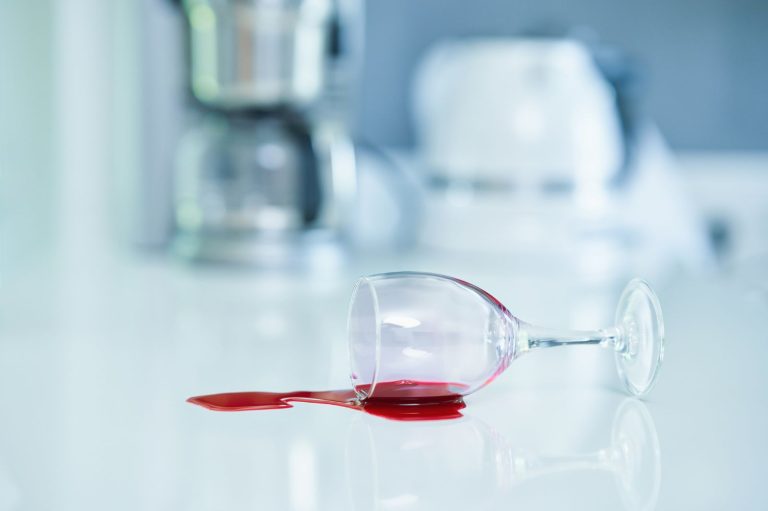
Travertine etches when exposed to acids (wine, coffee, citrus, vinegar).
- Light etching = surface looks dull or chalky
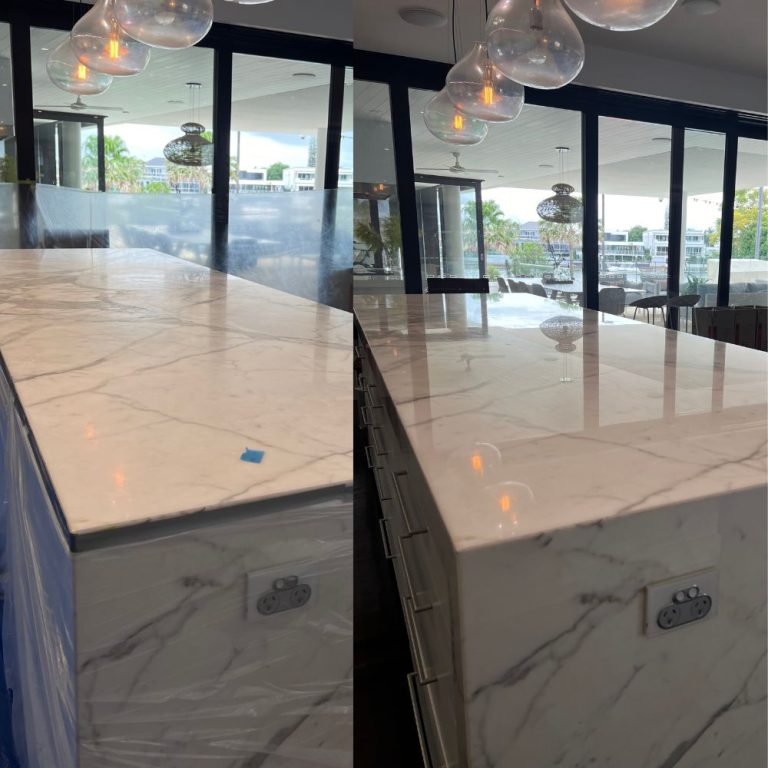
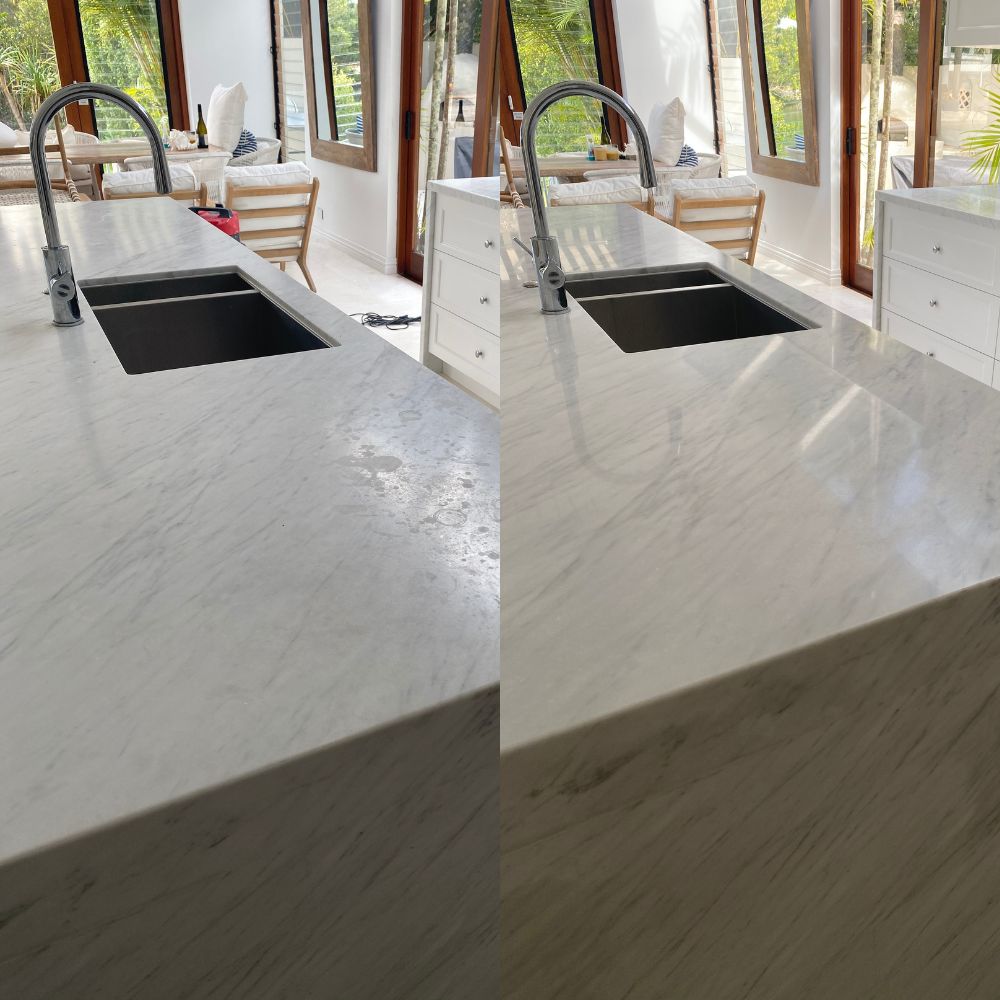
- Etching cannot be cleaned off and requires resurfacing, it must be honed and polished to restore the finish
Etching restoration is best handled by a stone professional.
Sealing & Ongoing Care
- Travertine benchtops should usually be sealed with a penetrating (impregnating) sealer
- Sealing helps slow absorption, not make the stone stain-proof
- Resealing is typically needed every 1–3 years, depending on use
For best sealing its best to contact your stone provider or a professional stone restoration company.
Contact Marble Everlast
Need help restoring, polishing or protecting your marble, stone or terrazzo surfaces? Speak with the Marble Everlast team today.
More from the Blog