
-
 competitive
prices + Free Quotes and
Onsite Evaluations




Travertine Cleaning & Polishing Brisbane & Gold Coast
Is your travertine surface looking dull, stained or worn? Marble Everlast cleans and restores travertine floors, steps, benchtops and bathroom surfaces across Brisbane and the Gold Coast. We can also assess chips, cracks, holes and etched areas, and quote on the work needed to improve your stone. Contact Marble Everlast for a free quote.
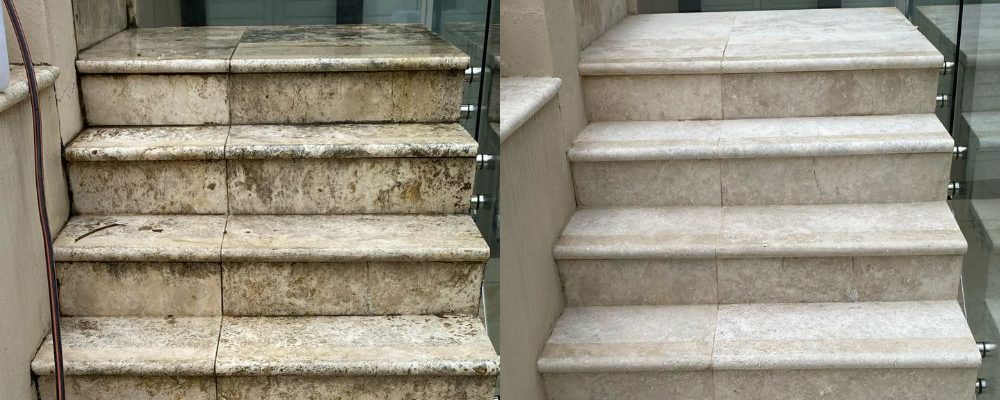
What can we help with?
Travertine can collect dirt in its pores and lose its finish over time. Depending on the condition of your stone, Marble Everlast can help with:
- Deep cleaning built-up dirt and grime
- Filling holes and repairing chips or cracks
- Resurfacing worn, scratched or etched areas
- Honing or polishing to achieve your preferred finish
- Sealing the stone to help reduce the risk of staining
The right approach depends on the surface and the extent of the damage. We’ll assess your travertine before recommending a restoration process
Do You Require Professional Travertine Restoration?
Contact The Marble Everlast Team Today
How travertine restoration works
A restoration may involve the following steps:
- Protect the surrounding area. Containing dust and liquid mess by masking off the area.
- Deep clean the stone. Deep cleaning the travertine surface with a suitable cleaning solution for your stone and scrub with our 17inch floor machine.
- Repair visible damage. After the deep clean, we can see areas that require repair this includes filling any holes, chips and cracks that have formed.
- Resurface the stone. After filling and repairing any damage, we can resurface the area with diamond pads. This step removes worn spots, etching, scratches and levels off the fill applied in step three.
- Apply your chosen finish. We apply the final finish depending on your style preference, finishes are more commonly polishing or honing.
- Seal the surface. A sealer is applied to the surface with a lambswool, this closes the pores and helps protect the surface by preventing stains and etching.
Your travertine may need only some of these steps. Ask Marble Everlast for a free quote based on the condition of your stone.
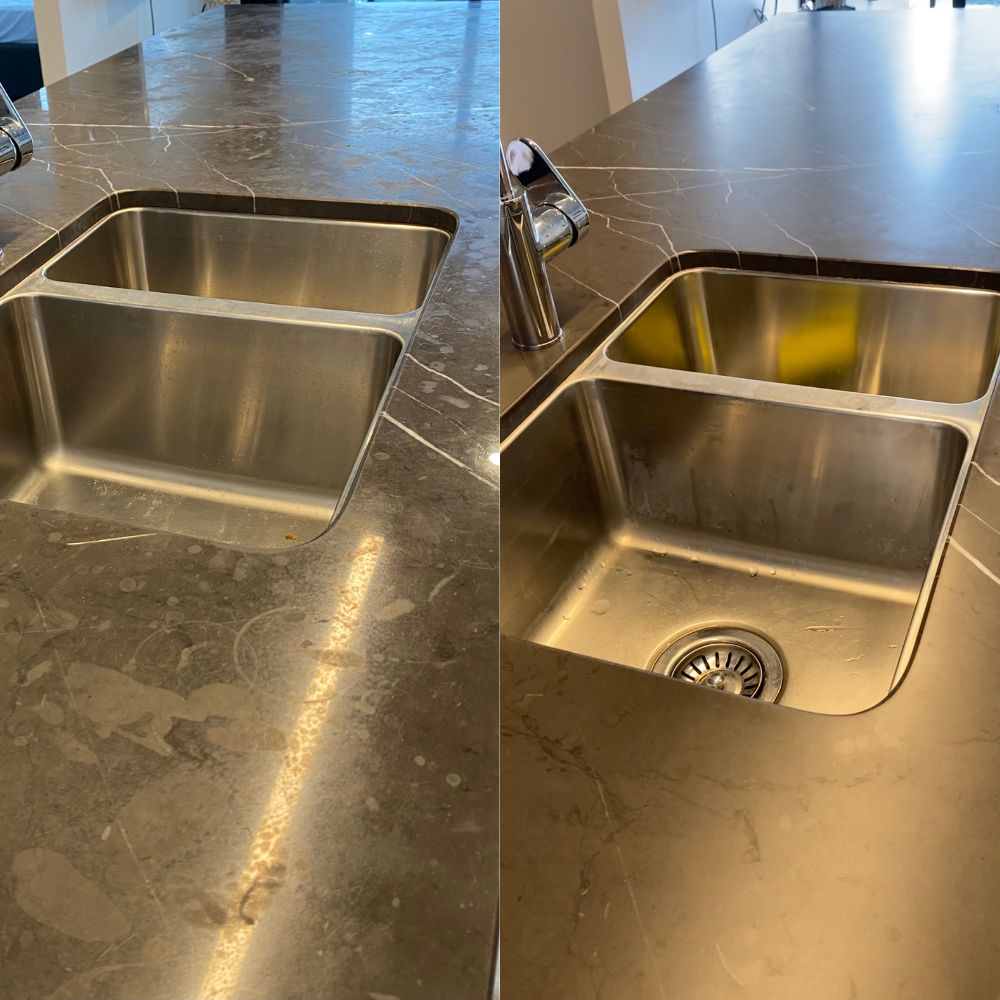
Travertine benchtop restoration
Travertine benchtops can be exposed to spills, staining, chips and etching during everyday use. If your benchtop has lost its finish or has visible damage, Marble Everlast can assess whether cleaning, repairs, honing or polishing will improve it. We can also advise whether it needs sealing.
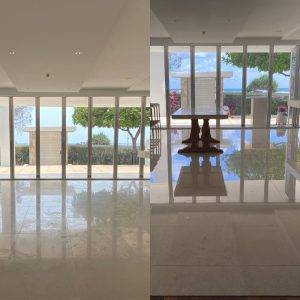
Travertine floor and tile restoration
Foot traffic can leave travertine floors looking dull, while dirt can build up in the stone’s pores. Marble Everlast can deep clean travertine, address suitable repairs and restore the floor’s finish. We’ll recommend the work that suits your floor after seeing its condition.
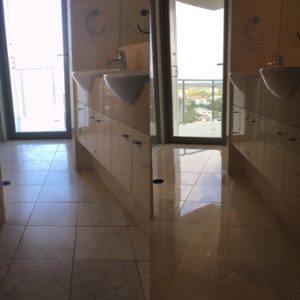
Travertine bathroom restoration
Travertine bathroom tiles and vanities can develop a build-up of grime and mineral deposits, particularly around showers and wet areas. If cleaning at home is no longer giving you the result you want, Marble Everlast can assess the surface and recommend a suitable cleaning or restoration service.
Get a quote for your travertine
Whether you have a floor that needs a deep clean or a damaged surface that may need repairs, Marble Everlast can advise on the next step. Contact us for a free travertine cleaning or restoration quote in Brisbane or the Gold Coast.
Some Of Our Recent Projects
-
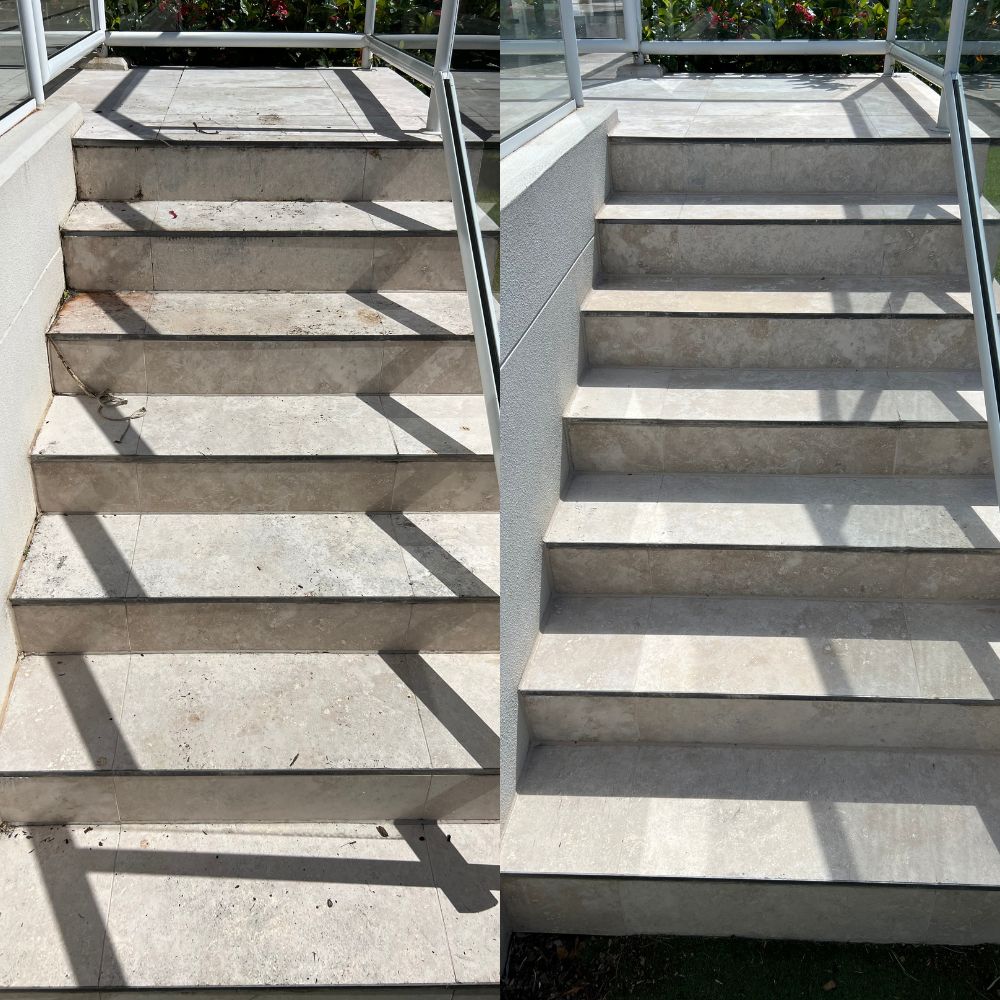
- Travertine Steps Clean Seal Silicone Restoration Brisbane Gold Coast
-
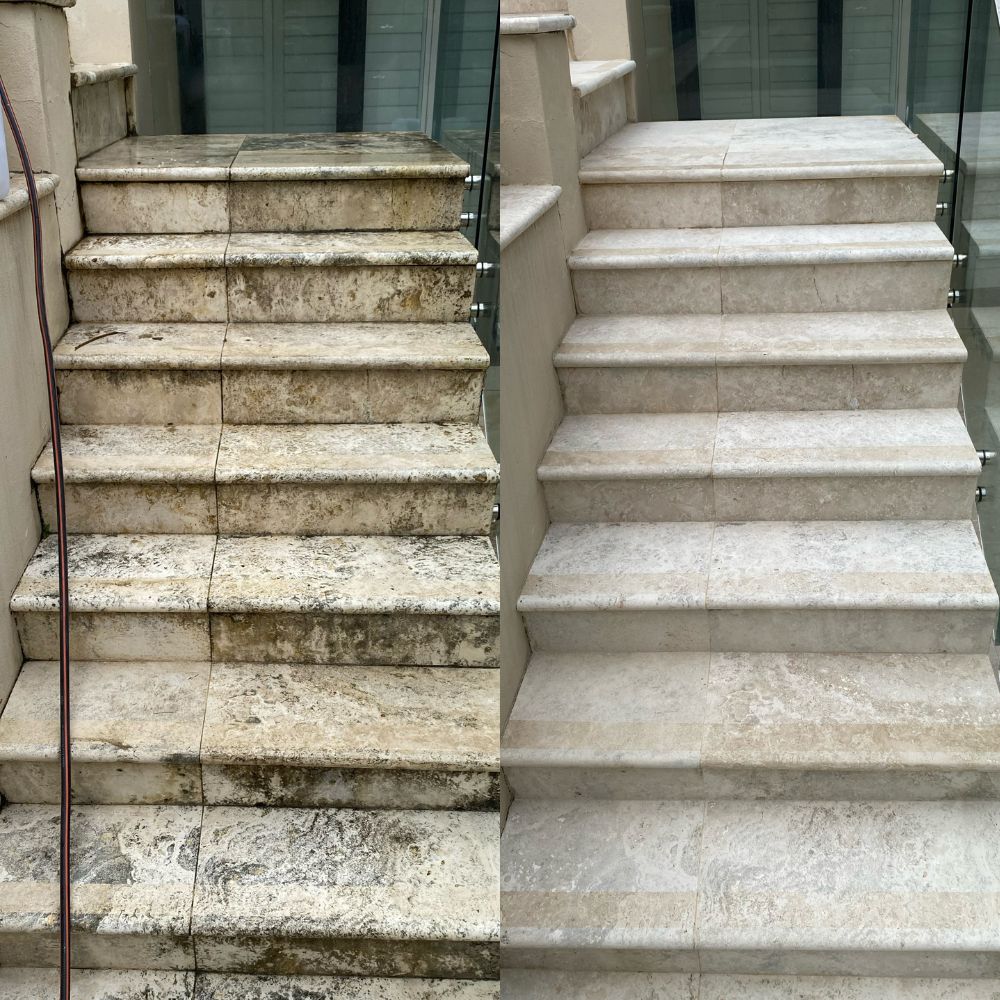
- Travertine Steps Clean Seal Brisbane Gold Coast
-
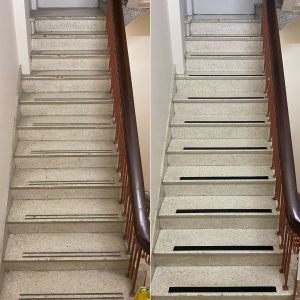
- Terrazzo Staircase Restoration Brisbane Gold Gold Coast

-
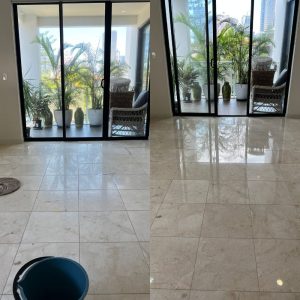
- Marble Floor Restoration Brisbane Gold Coast
-
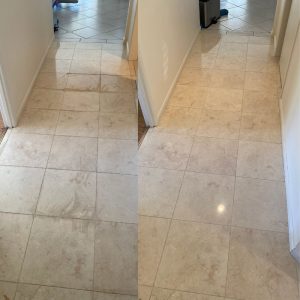
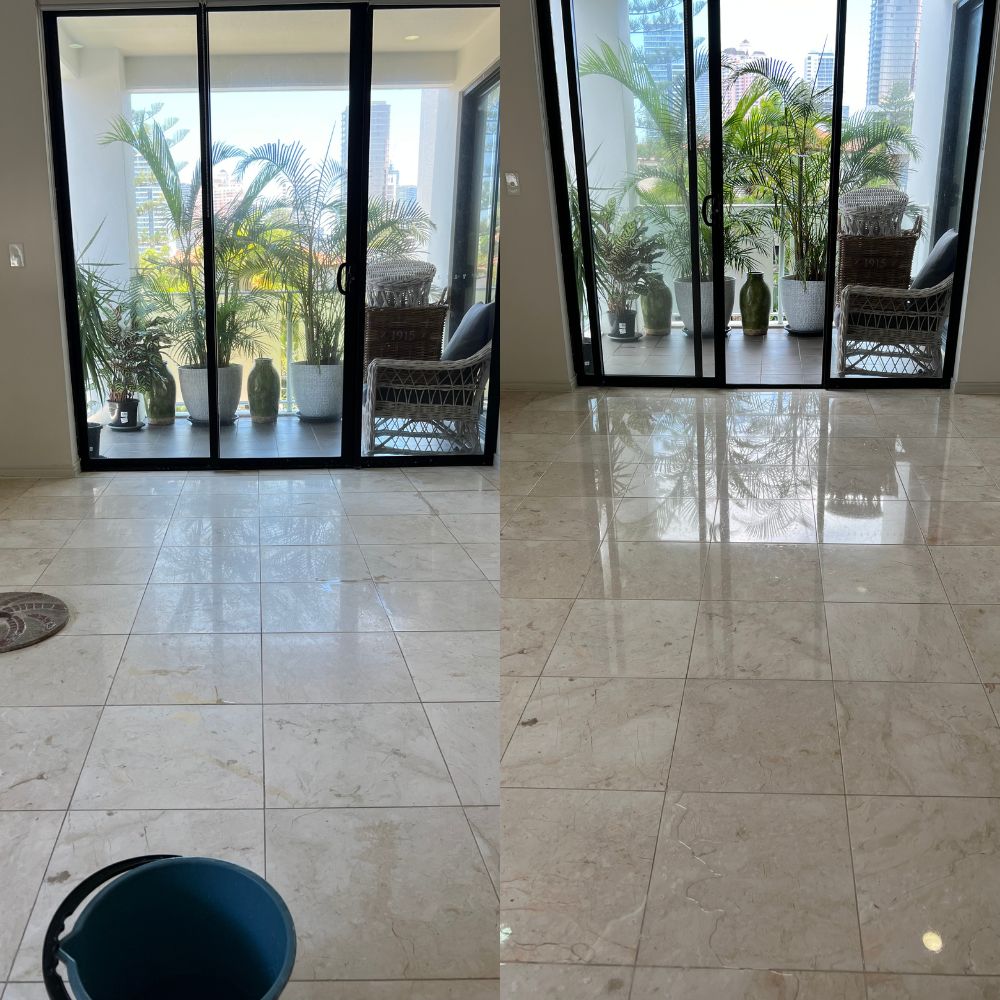
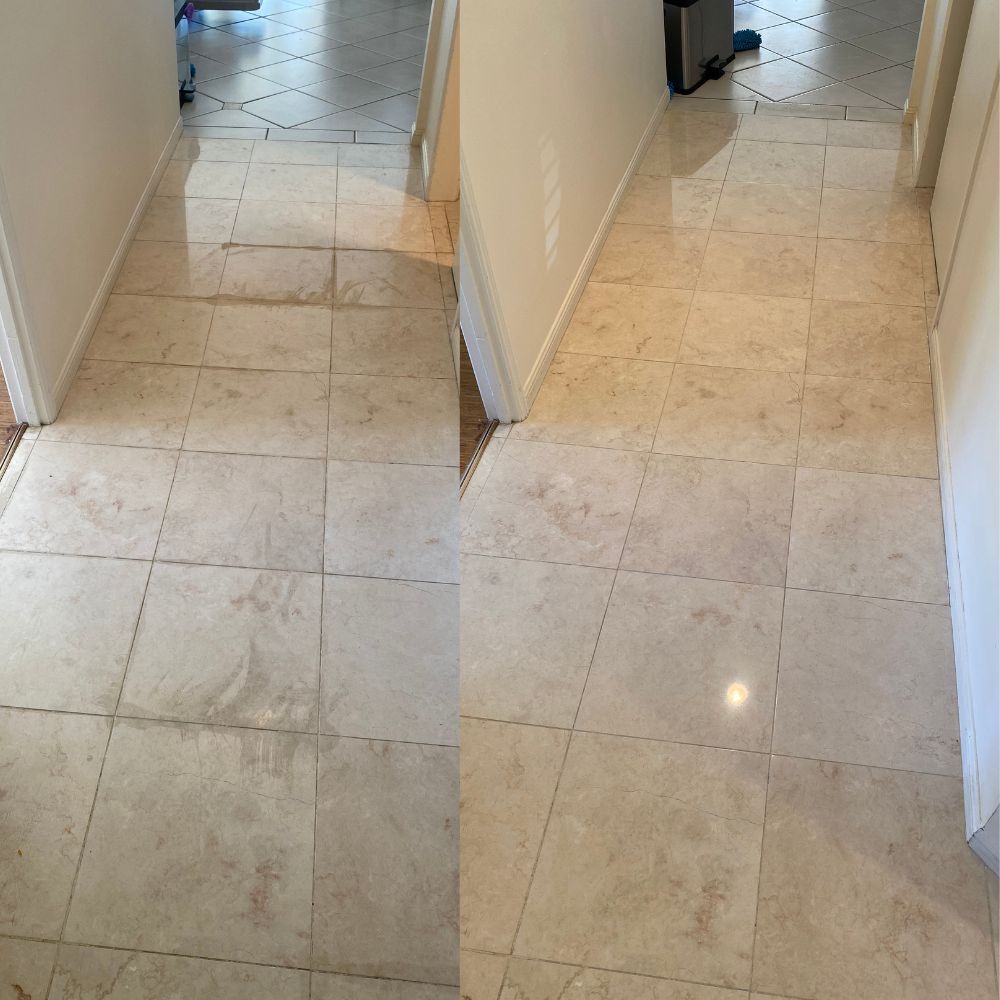
- Limestone Floor Damage Repair Before and After Brisbane Gold Coast by Marble Everlast
-
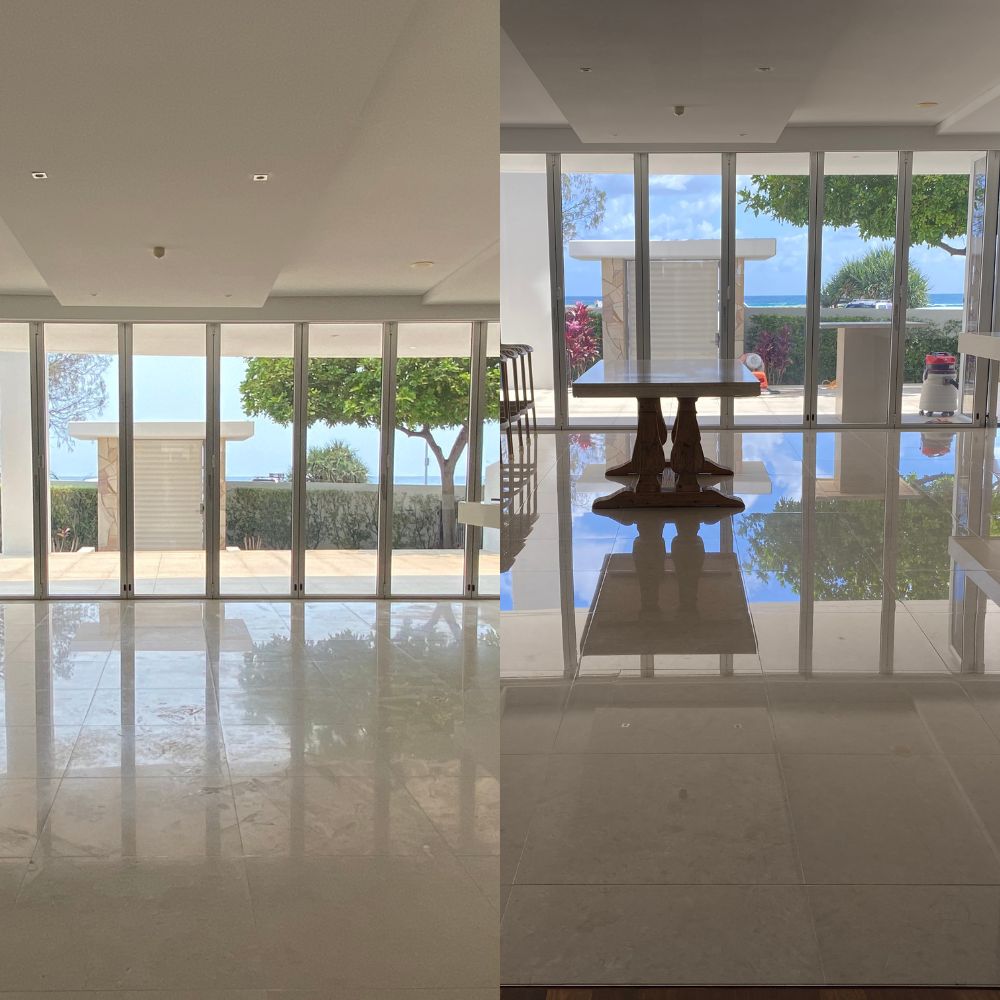
- Marble Floor Polishing Before and After Brisbane Gold Coast by Marble Everlast
-
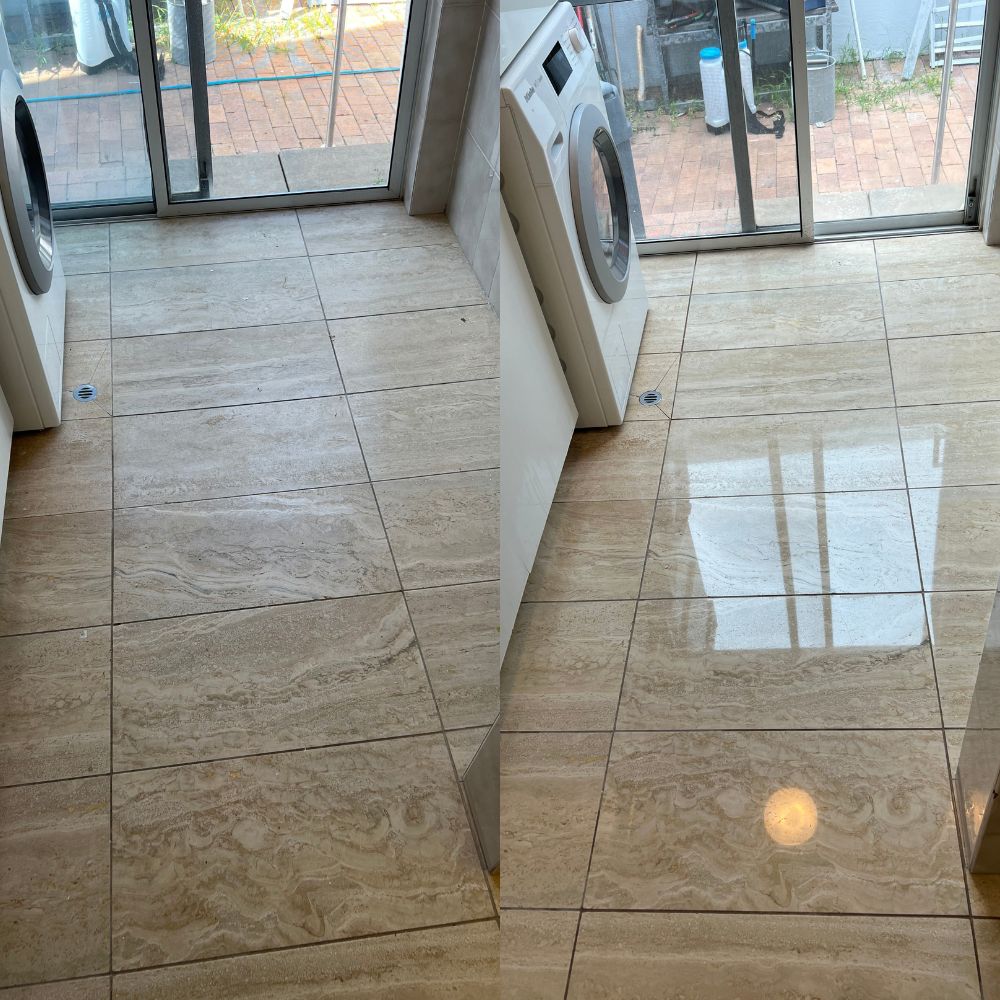
- Marble Laundry Floor Polishing Before After Brisbane Gold Coast
-
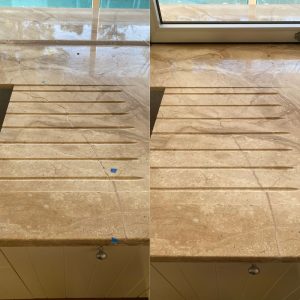
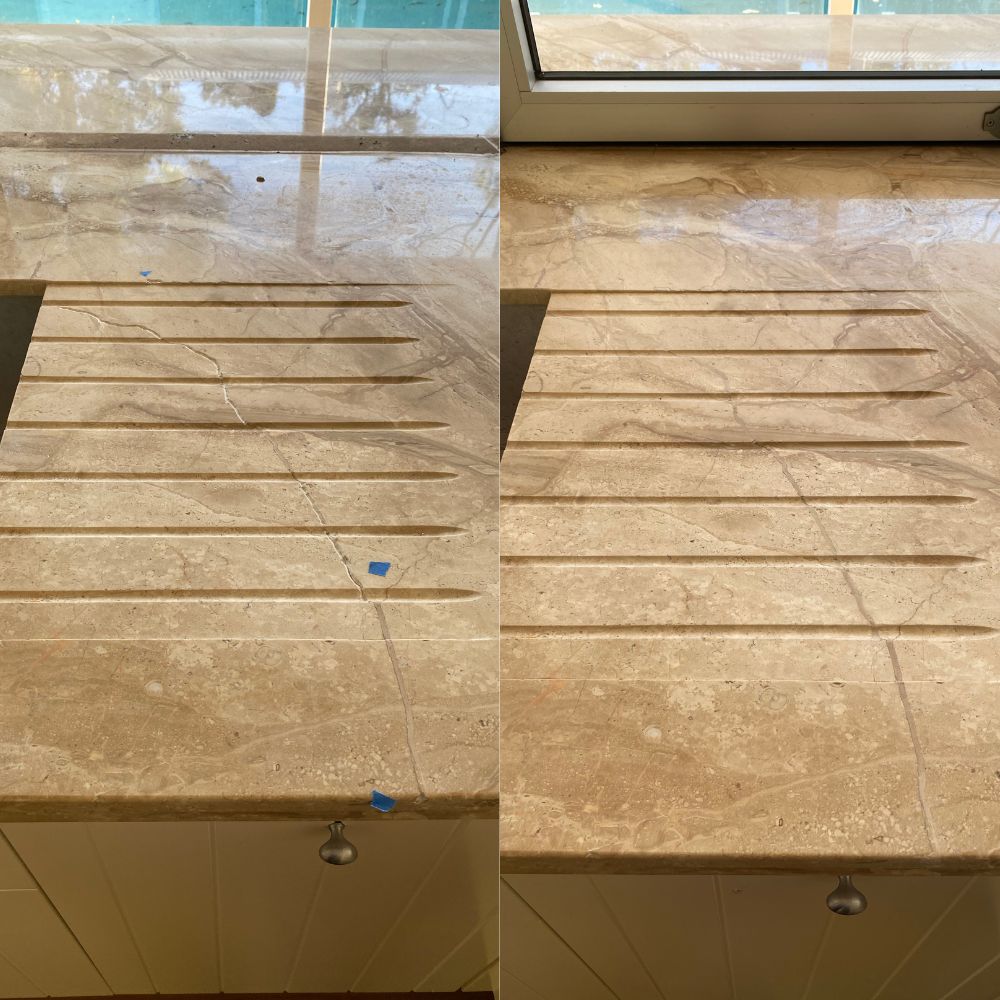
- Benchtop Crack Repair Brisbane Gold Coast
-
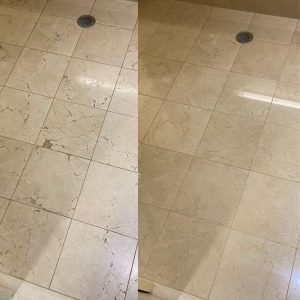
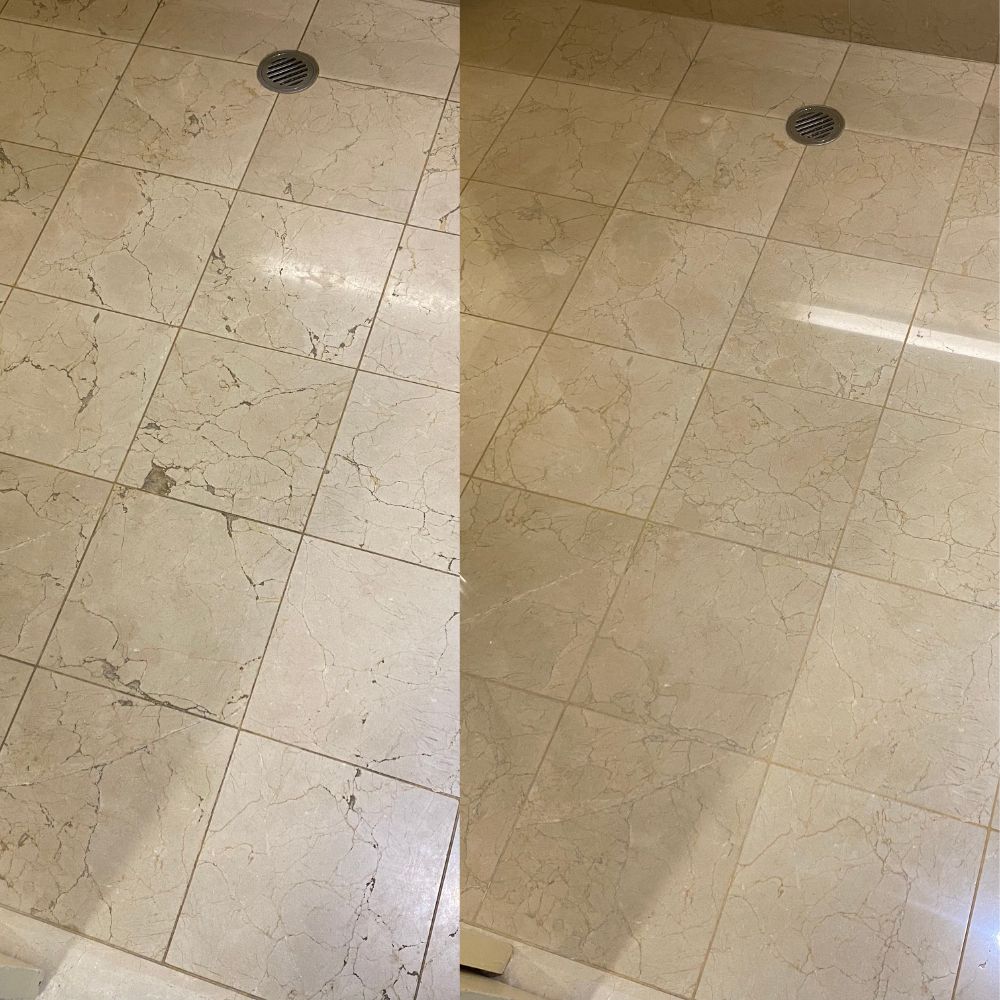
- Hotel Bathroom Marble Restoration Before and After Brisbane Gold Coast
What is travertine made of?
Travertine is a limestone rock made predominantly of calcium carbonate, making it a calcareous stone.
How Does Travertine Form?
Travertine is a sedimentary rock that forms in mineral springs but typically hot springs. Calcium carbonate known as calcite mixes with other minerals and form the patterns of swirls/movement in the stone distinctive to travertine.
How Do You Take Care Of Travertine?
The best way to take care of your travertine tiles is by ensuring your stone surface is sealed. Sealing the stone closes the pores and helps to prevent staining and etching of your surface. A regular cleaning schedule is also recommended with weekly warm water wipe downs and a monthly scrub with a stone cleaner specially designed for your travertine floor. Acids should not be used or left on the surface; this includes vinegar and lemon juice as the acid will react with the calcite in the stone causing etching. Damage from acids will also expose the pores of your stone to further staining.
Where Does Travertine Come From?
Travertine is mined from quarries found worldwide. Most of the worlds travertine is currently extracted from mines in Turkey, Italy, Iran, Mexico and Peru.
What is travertine used for?
Today travertine is more commonly used for pavers, tiles, benchtops and vanities. However, travertine has been used for various applications since the Romans who built aqueducts, monuments and even the great Colosseum out of travertine.
How are Travertine tiles made?
Travertine blocks are removed from quarries and shipped to manufacturers who process the stone. The stone slabs are cut down into equal sizes and sanded to the same width to ensure a uniform tile is created. From here the final finish is applied to the stone, standard finishes include honing and polishing.
Can travertine be used outside?
Travertine can be used outside and has been for millennia with a multitude of ancient buildings and infrastructure built from travertine.
Can travertine scratch?
Yes, like most natural surfaces travertine can scratch. However, travertine can be ground down and refinished to remove light scratches or filled with matching the stone colour. If your travertine surface has scratched call a professional stonemason to have your stone surface repaired.
Can travertine be repaired?
Yes, if your travertine surface has chipped, cracked, scratched, etched or stained it can be repaired and restored. Stonemasons can fill holes and use resins to reattach broken pieces. We can also resurface your floor with diamond pads on a floor machine to bring your travertine back to life.
Can travertine stain?
Yes, travertine is a porous surface that can stain. To avoid staining its a good idea to remove liquids or acidic substances quickly. If your stone has suffered from staining call Marble Everlast for a free quote on
Get Started & Book Now!
Brisbane's local stone restorations & repair specialist
*The information provided on this site about our processes and products used is intended for general guidance only. The methods for stone work can vary significantly depending on the specific characteristics and condition of your stone surface. Factors such as the type and composition of the stone can influence the appropriate process. Following a thorough evaluation, our team will advise you on the best approach for your stone surface.
What Our Customers Are Saying On Google